
The Easiest Way to Feel Less Inside
On aging toward nature, the healing power of a window view, and the company that ships the garden to your door.
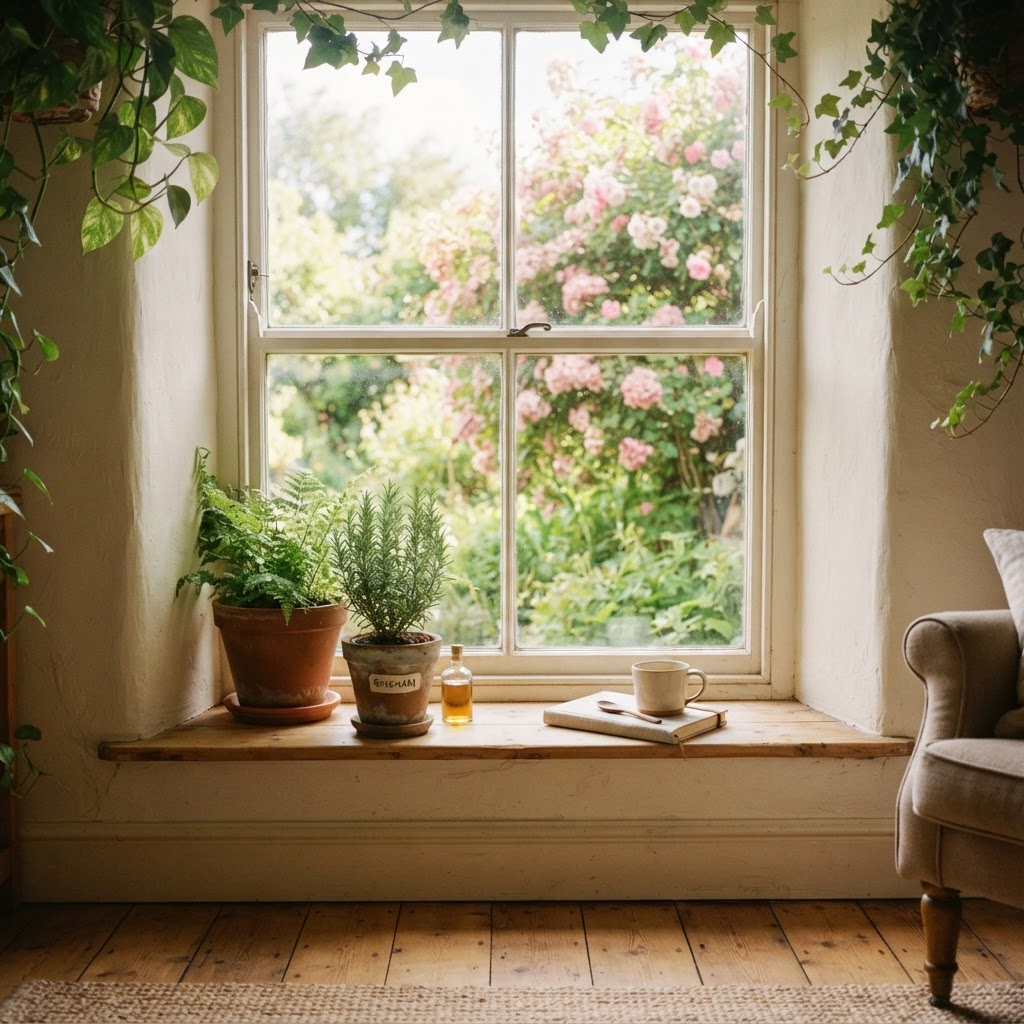
Here's something I've noticed as I get older: the closer to nature I am, the better I feel. It's not complicated and it's not subtle. More time outside, more green in my field of vision, more dirt under my fingernails, and everything downstream improves: my mood, my sleep, my patience, my perspective. I don't think I'm special in this. I think it's one of the oldest facts about being human, and we've simply built lives that make us forget it.
Living in Colorado, the outdoor half of this equation is almost embarrassingly easy. Hiking, paddleboarding, and walking basically anywhere: the mountains do most of the persuading for you. But here's the number that should give all of us pause: the average American spends about 90% of their life indoors. Even those of us with trailheads twenty minutes away spend the overwhelming majority of our hours inside walls. Which raises a question I've come to love: if we can't always get out to nature, how much of nature can we bring in to us?
More than you'd think. There's a name for this pull, biophilia, coined to describe the innate human drive to connect with living things. And the research behind it includes one of my favorite studies in all of medicine. In 1984, researcher Roger Ulrich looked at patients recovering from gallbladder surgery in rooms that were identical except for one thing: the view. Half looked out at a brick wall, half at a stand of trees. The patients with the tree view went home sooner, needed less pain medication, and had fewer complications. Read that again: nothing touched them. Nothing was prescribed. They just looked at trees, and their bodies healed faster. As a holistic-minded nurse, I have never stopped thinking about that study.
The view from your window is not decor. It's physiology, and you can't argue with that.
So no, you don't need a forest. You need green in your orbit: the porch, the patio, the beds along the foundation, or the window you stare through while the coffee brews. That's the part of "outside" you actually see every single day, and it's the part you have complete control over.
The Company that Ships the Garden
This is where Plants by Mail makes the fix quite easy. They've been doing exactly what the name promises since 1998: real plants, grown at their own nursery, shipped directly from the grower to your door. No middleman warehouse, no big-box garden center where the shrubs sit neglected in a parking lot for a month. Just 200-plus varieties of shrubs, trees, perennials, and edibles, packed carefully, backed by a 30-day guarantee, with free shipping on orders over $100.
What I appreciate most, though, is that they make it easy for people who don't think they have a green thumb. Their site sorts plants by the problem you're solving and the life you're living: drought-tolerant, deer-resistant, container-friendly, privacy planting, attracts birds and butterflies. Their zone finder tells you exactly what will survive your climate before you fall in love with something that won't, and their care guides walk you through the rest. The distance between "I want more green in my life" and green actually arriving at your door has never been shorter.
Where to Start (Pick Your Door)
The window view. Remember Ulrich. Whatever window you look through most, plant for that view first. A flowering shrub, an ornamental grass that moves in the wind, anything alive where a fence or a wall used to be. You'll collect that view hundreds of times a year without trying.
The container. No yard required. A pot on a porch, a balcony, a doorstep. My pick here is Chef's Choice Rosemary ($19.98): compact, low maintenance, bred with a higher oil content for cooking, with petite violet blue flowers in spring you can snip and bring inside. A container herb is the overachiever of this whole list, view, fragrance, and dinner seasoning in one pot, and every snip saves you one of those plastic clamshells of grocery store herbs destined to wilt in the crisper.

The living fence. Privacy plantings are my favorite example of a swap hiding in plain sight: where others install vinyl fencing, you can grow a wall. It blocks the view and the noise the same way, but this wall makes oxygen, shades the house, feeds the birds, and gets more beautiful every year instead of less. For the softer version, train a Star Jasmine Vine ($19.99) up a trellis, fence, or porch post: glossy evergreen leaves, white pinwheel blooms, and a sweet fragrance from late spring into summer that makes walking to your own front door feel like an event.
The edible corner. A fruit-bearing plant is the garden's version of the gateway swap: it pays you back in actual food, and there is no produce aisle on Earth that competes with fruit you grew yourself. The Little Miss Figgy Dwarf Fig ($21.95) is the one I'd start with, for a reason that delights me: figs only last a few days after picking, which is why store figs are always a disappointment. This is a fruit you essentially cannot buy at its best. You have to grow it, and this dwarf variety produces sweet, dark purple figs with strawberry-red centers on a plant small enough for a container. The trainer in me will add that gardening is quietly excellent exercise, squatting, hauling, digging, reaching, and the healthiest people I know in their seventies and eighties are, almost without exception, gardeners.

And about the air. Trees and shrubs planted around a home genuinely work for a living: they filter dust and particulates, release oxygen, cool the air through shade and transpiration (a mature tree can rival several air conditioners' worth of cooling), and soften noise. Indoors, I'll give you the honest version rather than the Pinterest version: potted plants do remove some airborne compounds, but you'd need a small jungle to purify a room on plants alone. What indoor greenery reliably delivers is the other medicine: measurably lower stress, better focus, a gentler nervous system, and that "less inside" feeling this article is named for. The air gets a little better. You get a lot better.
Required Reading for the Green Curious
If you want to understand why all this matters beyond your own windowsill, let me hand you a book: Total Garbage by Pulitzer Prize-winning journalist Edward Humes. Fair warning, it will ruin your ability to look innocently at your own trash can, your grocery bags, and especially your lawn, and it does it in the most readable, occasionally laugh out loud way. Humes' great talent is showing you the waste hiding in plain sight inside completely ordinary American life, then pointing out, almost cheerfully, that waste is the rare global problem regular people can actually do something about, from their own homes, starting today, usually while saving money. Its quite the reassuring read, and one I'd highly recommend.
His material on our yards is the part I can't stop repeating at dinner parties. The American lawn is, by irrigated acreage, our largest crop. Not corn. Not wheat. Grass. We pour staggering amounts of water, fertilizer, and gas-powered mowing into a monoculture that feeds no one, shelters almost nothing, and exists mostly so the neighbors won't talk. Humes makes the case that every square foot of that turf we hand back to something alive and useful, garden beds, native plants, food, is a quiet double win: less water, less mowing exhaust, less chemical runoff on one side, and on the other, plants doing what plants do, feeding pollinators, building soil, pulling carbon, and cleaning the air around your home.
And when what you plant is food, the wins stack higher. A tomato from your own bed has no packaging, no refrigerated truck, no food miles, and no plastic clamshell destined for a landfill; a third of the food America grows gets wasted on its journey to us, and the journey from your garden to your kitchen is roughly eleven steps. Humes' framing stuck with me because it matches everything I believe from my two professional lives: growing your own plants and food helps your body, that's the nurse and trainer talking, and it helps the earth's body too, same principle, bigger patient. It's regenerative thinking again, one blueberry bush at a time.
When we visited my grandparents in Dana Point growing up, every summer we would notoriously head to the beach as soon as humanly possible and stay all day, until our skin resembled leather and we had to come home knowing exactly what awaited us: our grandmother would snip a little piece from the beloved aloe plant she so dearly cared for on the porch, and spread its healing gel over our sunburns We would wake the next morning somehow not dying of severe red skin all over our bodies. I truly believe it is one of those gifts handed down generation after generation. Yes, you can buy aloe vera gel from any old grocery store, but there is something special about getting your aloe from the mother plant herself, and learning to care for her and tend to her, just as my grandmother did. My beloved grandmother has since passed away, but I cherish the memories of her passed-down knowledge, and whenever I see my own aloe plant, I feel closer to her, like she's here with me, helping tend to it as she once did. That, in the end, is what this whole article is about. A plant is never just a plant. It's a view that heals, a fence that feeds the birds, a fig you grew yourself, and sometimes, it's a grandmother on a porch in Dana Point, still teaching. (And should you want a mother plant of your own, Plants by Mail ships the Safari Sunrise Aloe ($21.98), the classic healing foliage my grandmother kept, plus showy pink-orange bloom spikes she would have adored.)

A plant is never just a plant. It's a view that heals, a fence that feeds the birds, a fig you grew yourself, and sometimes, it's a grandmother on a porch in Dana Point, still teaching.
The Honest Notes
Real talk for my fellow Coloradans and anyone in a colder zone: Plants by Mail grows in Alabama, and some of their southern staples (looking at you, camellias) won't survive our winters. That's not a flaw; it's what the zone finder is for. Filter by your USDA zone and lean on the drought-tolerant options, which suit our dry altitude beautifully. And several of my picks above, the rosemary, the jasmine, and certainly the aloe, are happiest in cold country as potted commuters: summers on the porch, winters on a sunny windowsill, which conveniently puts a living thing in your window view during the exact months you need it most. Beyond that, know that plants are living things: some die, even on experienced watches, which is why the 30-day guarantee matters and why nobody should treat a lost shrub as a personal failing. Start with one pot or one bed, not a whole landscape. Like every swap in this Journal, the goal isn't a renovation. It's one green thing where there wasn't one, repeated until the view from every window has something alive in it.
The Sunday Edit
One email. Every Sunday.
One room, one swap, one piece of research — plainly explained. No spam, no brand partnerships, no noise.