
Start With the Paper Towels
A whimsical little rebellion for your kitchen counter, one lemon-printed towel at a time.
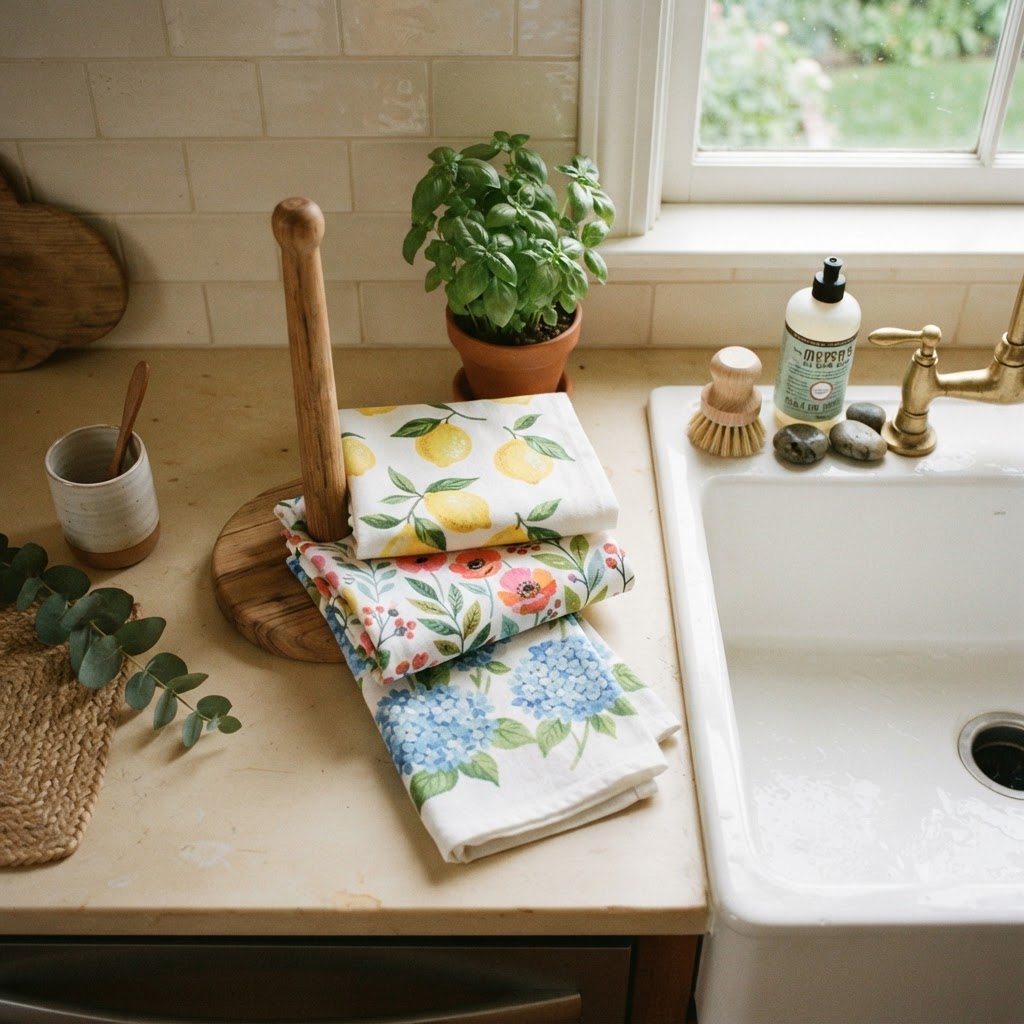
The eco-conscious kitchen has a reputation problem. Say the words, and people picture a gut renovation: compost tumblers, a fridge full of mason jars, bulk bins, a personality change. So allow me to lower the stakes considerably. You don't have to start big. You can start with the most unassuming object in your entire home.
Let's talk about the paper towel.
Think about the strangeness of this thing we all keep on a little throne beside the sink. Somewhere, a tree grew for decades. It photosynthesized through droughts and winters, sheltered birds, made oxygen out of thin air. Then it was cut down, pulped, pressed, bleached, perforated, wrapped in plastic, and trucked across the country so that one Tuesday you could wipe up a splash of oat milk with it for four seconds and throw it away. The tree's whole biography, spent on a splash.
Now multiply. Americans burn through more paper towels than the rest of the world combined, and the average household tosses a small forest's worth every year. Here's the twist most people don't know: used paper towels can't be recycled. Food-soaked fibers are too short and too soiled, so every sheet goes to the landfill. The paper towel is a one-way trip by design, and we buy the trip again every week, forever. It's the subscription nobody remembers signing up for.
Enter: the Not-Paper Towel
The fix has existed since your great-grandmother's kitchen; it just got a glow-up. Earthly Co. makes cloth "not paper" towels from 100% cotton flannel, and one 10-pack replaces more than 80 rolls of disposables. Read that number again. Eighty-plus rolls, replaced by a stack of towels that fits in a drawer.
They work the way you'd hope: wipe the counter, scrub the spill, dry your hands, then toss them in the wash instead of the trash and use them again, and again, and again. They're multipurpose to the max: cleaning cloths, napkins, guest towels, even tissues in a pinch. And when years from now they finally retire, cotton flannel is compostable, so a towel that saved eighty rolls of paper doesn't even leave a wrapper behind. From tree biography to zero waste, in one drawer swap.
But here's my favorite part, the part that makes this a joy instead of a chore: they're beautiful. Disposable paper towels are beige, surrender. These are little kitchen mood boosters. Pickling Lemons ($24.95), the print that started it all, feels like picking lemons on a warm summer day. Flower Power ($24.95) is lush blooms and lively pinks, an instant mood lift on a gray morning. And Blue Hydrangea ($24.95) brings garden party energy straight to the sink, like twirling past a row of hydrangeas on a sunny afternoon. This matters more than it sounds. We keep the habits that delight us. A towel you actually like reaching for is a towel you'll keep reaching for, and suddenly sustainability isn't discipline; it's decor.


The Gateway Swap
Here's what I've noticed, in my own kitchen and in the homes of everyone I've nudged toward this: the paper towels are never the end of the story. They're the gateway. Something shifts when the most disposable object in your house becomes the least disposable. You start seeing the kitchen differently. The scratched nonstick pan starts looking suspicious (I have thoughts). The supermarket olive oil bottle starts looking tired. Room by room, drawer by drawer, the swaps find you. That's the entire philosophy of this site in miniature: not a renovation, just one better choice, repeated until it becomes a home.
And the math flatters you from day one. At $24.95 for a 10-pack that outlasts 80-plus rolls of paper towels, this isn't the noble expensive choice; it's the cheap one wearing a floral print. The nurse in me loves a swap with no downside, and the trainer in me will tell you what I tell every client: consistency beats intensity. One small habit, done every day, outworks the grand gesture every time. That's true of exercise, and it turns out it's true of kitchens.
One day a few months ago, I was visiting my parents at their home not far from mine. Looking around the kitchen casually, I noticed something different out of the corner of my eye. My mom had done it again (she is usually the one giving me the tips and tricks on how to live a better life, to be honest): notpaper towels, wrapped around the paper towel holder next to the kitchen faucet, covered in a serene but pretty pattern I couldn't quite place. I immediately filled with joy that she had gone out of her way to make this swap in her already very sustainable kitchen. It's one thing to want a better world for yourself and your loved ones. It's a whole other level of joy and satisfaction to watch the people in your corner wanting it right alongside you. And that, I think, is the quiet secret of these swaps: they're contagious. Nobody lectures anybody. One counter simply starts looking a little brighter, and the next kitchen follows.
The Honest Notes
A few real-world notes, because The Standard demands them. There's a two-week adjustment period where your hand still floats toward the empty paper towel spot; hang the cloth towels somewhere visible and the habit rewires itself. You'll want a little bin or basket for used ones between washes, and they slip into any regular laundry load without ceremony. And I'll grant the hard cases: bacon grease, certain pet surprises, the truly cursed messes. Keep a single emergency roll in the back of a cupboard for those, guilt free. The goal was never perfection. The goal is eighty rolls' worth of trees still standing, and a prettier counter while you're at it.
Every product in The Sustainable Edit is vetted against The Standard: clean materials, honest manufacturing, durability, and editorial independence. I only recommend what I'd put in my own home. Some links are affiliate links, which support the Journal at no cost to you.
The Sunday Edit
One email. Every Sunday.
One room, one swap, one piece of research — plainly explained. No spam, no brand partnerships, no noise.